Computex 2026: Intel Xeon 6+ & Foxconn Racks for Agents (2026)
Introduction
At Computex 2026 in Taipei (June 1–2, 2026), Intel framed a shift many homelab and small-datacenter builders already feel in software: agentic AI is not one long GPU inference job — it is thousands of small processes orchestrating tools, files, APIs, and memory. GPUs still matter for model forward passes, but CPUs, memory bandwidth, PCIe, and networking become the bottleneck for stacks like OpenClaw, Hermes Agent, or always-on gateway daemons.
Intel’s answer is systems-level: Intel Xeon 6+ on the Intel 18A process, rack-scale AI infrastructure co-developed with Foxconn and SambaNova SN-50 RDUs, plus Ethernet E835 up to 200GbE. Official sources: Intel puts agentic AI to work with Xeon 6+ and Computex 2026 AI innovations.
This article translates the keynote into decisions for 24/7 agent hosts — whether you run a Mac mini, a 2U Xeon box, or dream about Foxconn-integrated racks — with minimal vendor fluff and links to our OpenClaw multi-agent guide, Hermes skill distillation, and local LLM quantization.
Why agentic workloads break “GPU-only” planning
| Workload phase | Dominant resource | Typical homelab pain |
|---|---|---|
| Gateway / routing | CPU cores + RAM | OpenClaw bindings starve on 4 cores |
| Tool loops | Disk I/O + PCIe | NVMe queue depth, Docker volumes |
| RAG / memory search | RAM + CPU | FTS5, embedding index on same box |
| Model inference | GPU or CPU AVX | VRAM caps; quant tradeoffs |
| Egress | Network | Webhook latency, 10GbE saturation |
Intel’s Computex messaging explicitly positions Xeon as the control plane for agentic scale (newsroom, June 1 2026). That matches what operators see: a “24/7 hanging agent” is closer to an always-on telecom workload than to a single ollama run session.
Intel Xeon 6+ — what changed at Computex
Silicon and core counts
Xeon 6+ extends the Xeon 6 family on Intel 18A (first data-center CPU on that node, per Intel). Public highlights include:
| Spec (Intel stated) | Value | Implication for agents |
|---|---|---|
| Efficient-cores per socket | Up to 288 E-cores | High concurrent tool/goroutine density |
| L3 cache (reported at keynote) | 576 MB (per 2-socket demos) | Larger in-memory routing tables |
| Memory | 12-channel DDR5 | More agents per host before swap |
| I/O | 96 lanes PCIe Gen 5 + CXL | NVMe + NIC + optional RDU placement |
| Ethernet companion | E835 up to 200GbE | Less NIC-bound gateway traffic |
Intel claims up to 2.5× performance vs prior gen and strong performance per watt for cloud-native and agentic workloads on the same newsroom page.
Rack-scale density (the “150k agents” headline)
For maximum agent density, Intel described a liquid-cooled rack configuration:
| Metric | Intel example | Notes |
|---|---|---|
| Compute space | 32U | Rack-scale blueprint, not single tower |
| Cores per rack | 36,864 cores | Xeon 6+ dense E-core layout |
| Rack power (compute) | ~100 kW | Liquid cooling assumed |
| Agent capacity (Intel narrative) | Highest agent density positioning | Hyperscale / intelligence centers |
Foxconn’s role: systems integration for production-ready racks combining Intel Xeon with SambaNova SN-50 RDUs for inference acceleration, plus a CPU-dense variant without extra accelerators for cost-optimized inference and data processing (Computex press narrative).
Foxconn + SambaNova: disaggregated rack-scale inference
The partnership is not “one giant GPU box” — it is disaggregated:
┌─────────────────────────────────────────────────────────┐
│  Rack-scale AI (Foxconn integration)                     │
├─────────────────┬───────────────────┬───────────────────┤
│ Xeon 6+ trays   │ SambaNova SN-50   │ CPU-dense trays   │
│ Agent control   │ RDU inference     │ No extra accel.   │
│ plane, tools,   │ bursts, token-    │ Batch inference,  │
│ orchestration   │ heavy paths       │ ETL, hybrid AI    │
└─────────────────┴───────────────────┴───────────────────┘
         │                    │                    │
         └──────── 200GbE E835 fabric ─────────────┘
| Variant | Best for | Homelab analogue |
|---|---|---|
| Xeon + RDU | High-throughput inference + agent orchestration | N/A at home scale |
| CPU-dense Xeon rack | Cost-optimized inference without discrete GPU | Many-core Epyc/Xeon DIY |
| Rack-Scale Blueprints | Open standards, avoid lock-in | N/A |
Recommended path (enterprise):
- If workloads are GPU-shaped single models → RDU + Xeon split as Intel demos.
- If workloads are always-on agents with bursty small models → prioritize CPU-dense trays and fast networking.
- If you are a homelab builder → do not buy a 100 kW rack; steal the design pattern (separate control plane from inference).
Homelab vs Mac mini vs rack: decision matrix
| Factor | Mac mini M4 (agent hobbyist) | 2-socket Xeon 6+ tower | Foxconn rack-scale |
|---|---|---|---|
| Upfront cost | ~$600–1,500 | $8k–40k+ (platform dependent) | Capex + facility |
| 24/7 agents | 1–5 heavy gateways | 10–100+ isolated agents | 10k–150k (vendor scale) |
| PCIe / RAM ceiling | Unified memory, few lanes | 12-channel DDR5, Gen5 | CXL scale-out |
| Power | ~20–40 W idle | 400 W–1 kW+ | ~100 kW / rack |
| Best stack | OpenClaw, Hermes, local 7B | Multi-tenant gateways + Ollama fleet | Hyperscale inference + agents |
| Bottleneck | RAM for local LLM | Cooling, NIC, disk | Facility, integration |
Recommended path (builders):
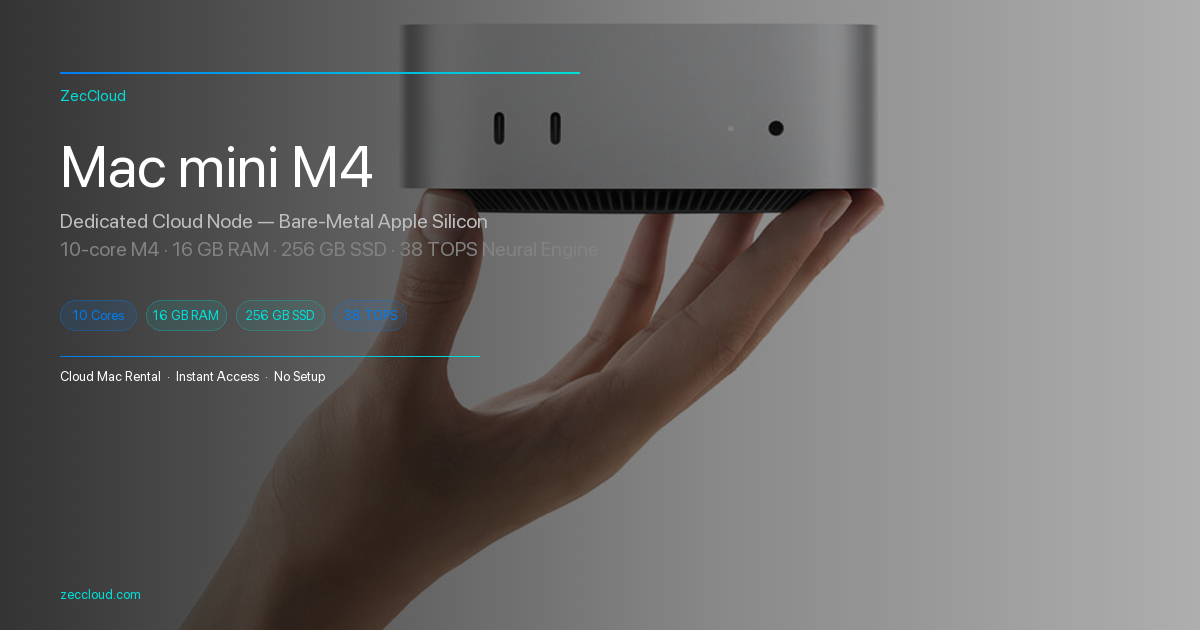
- If you run OpenClaw + Telegram on one box → optimize RAM, NVMe, and stable egress first; see Mac mini M4 SSH remote ops.
- If PCIe or RAM caps hurt local 70B → quantize per DeepSeek-R1 local guide.
- If agents multiply across teams → Xeon 6+ E-core density is the on-prem story Intel is selling — watch ODM boards from Supermicro, GIGABYTE, ASUS (listed on Intel newsroom).
What Computex 2026 means for OpenClaw / ECC-style stacks
Control-plane saturation
Multi-agent routing (OpenClaw bindings) multiplies processes, logs, and channel webhooks. Xeon 6+ targets high thread count for exactly that layer — not replacing your GPU for 405B, but stopping the orchestrator from choking.
Networking as agent fabric
Intel Ethernet E835 (10–200GbE, RoCEv2/iWARP) addresses data movement between inference nodes and tool servers. Homelab takeaway: if agents call remote APIs heavily, 2.5GbE / 10GbE on the host matters as much as CPU generation.
Procedural memory still lives on disk
Rack-scale CPU does not remove the need for skill files and session search — see Hermes skill distillation. Hardware accelerates concurrency; software accelerates repeatability.
Runbook: map keynote specs to your current host
Step 1 — Baseline agent load
# Processes + threads (gateway + workers)
ps aux | grep -E 'openclaw|hermes|ollama' | wc -l
# Memory pressure
vm_stat  # macOS  |  free -h  # Linux
Step 2 — Find PCIe / disk bottlenecks
# Linux: NVMe util
sudo iostat -xz 1 5
# macOS: Activity Monitor → Disk, or `sudo powermetrics --samplers nvme`
Step 3 — Measure network for webhooks
# Sustained egress test (replace with your region endpoint)
curl -o /dev/null -w '%{speed_download}
' -s https://speed.cloudflare.com/__down?bytes=100000000
Step 4 — Compare core headroom vs Intel density target
Document your usable cores and RAM/agent. Intel’s rack example (36,864 cores / 32U) is a scale reference, not a purchase guide — use it to sanity-check whether your homelab is CPU- or GPU-bound.
Step 5 — Plan inference disaggregation
If local GPU is saturated, move batch inference to a second machine (CPU-dense or GPU box) and keep gateway on a low-latency core — mirrors Intel’s Xeon + RDU split at desk scale.
Step 6 — Monitor 24/7 thermal/power
Agents do not sleep; sustained 65–85°C on small boxes throttles orchestration. Rack vendors push liquid cooling at 100 kW for a reason.
Step 7 — Follow ODM availability
Intel lists ASUS, Dell, HPE, Lenovo, Supermicro, GIGABYTE on Xeon 6+ platforms — track SKUs rather than keynote slides when buying hardware.
Troubleshooting agent hardware bottlenecks
Gateway lag with low GPU utilization
Pattern: CPU at 90%, GPU idle, messages queue.
Fix: Add cores/RAM to gateway host; split inference to second node; reduce per-agent log verbosity; review OpenClaw agent count.
NVMe latency spikes during tool loops
Pattern: iowait high during file-writing agents.
Fix: Dedicated NVMe for workspace; avoid Docker overlay on slow disks; cap concurrent write tools.
1GbE uplink saturates
Pattern: Webhook delays, Telegram timeouts.
Fix: 2.5/10GbE NIC; local caching; align with E835-class RDMA only if you run clustered inference (enterprise).
“Need Computex rack” mismatch
Pattern: Team assumes GPU rack solves agent crashes.
Fix: Profile orchestration first — Intel’s CPU-dense Foxconn variant exists precisely for non-accelerated hybrid AI paths.
FAQ
Conclusion
Computex 2026 marks hardware catching up to agentic software: Intel Xeon 6+ on 18A for orchestration density, Foxconn-integrated rack-scale designs with optional SambaNova RDUs, and E835 networking to move data between inference and control planes. Homelab builders should not chase 100 kW racks — they should read the pattern: separate agent control from inference, widen PCIe/DDR5/NIC, and harden 24/7 ops.
Track ODM platforms, profile your gateway CPU, and keep software memory (skills, routing) aligned with whatever silicon you deploy.
Official reading: Xeon 6+ agentic AI · Computex 2026 announcements.
Official Intel Computex 2026 sources
Xeon 6+ agentic AI positioning, Foxconn rack-scale integration, and E835 networking are documented on Intel Newsroom. Use these pages when you validate specs or brief your team.